Top 3 World Cup Football (2026) Mistakes Bettors Make
The biggest 2026 World Cup football mistake is treating reputation as current evidence. Brazil, France, Argentina, and England may attract the most attention, but tournament results depend on qualifyi...

Top 3 World Cup Football (2026) Mistakes Bettors Make
The biggest 2026 World Cup football mistake is treating reputation as current evidence. Brazil, France, Argentina, and England may attract the most attention, but tournament results depend on qualifying form, squad availability, tactical matchups, travel, and market price. The 2026 FIFA World Cup will feature 48 teams across Canada, Mexico, and the United States, with 104 matches scheduled under FIFA’s expanded format. Football Compass helps fans compare match predictions, team tactics, player statistics, and daily tournament developments rather than blindly backing famous shirts. The practical rule is simple: assess the probability of an outcome, then compare it with the odds before making any decision. Use official FIFA information, confirmed lineups, and reliable injury reports; never treat a prediction as certainty, and never stake money you cannot afford to lose.
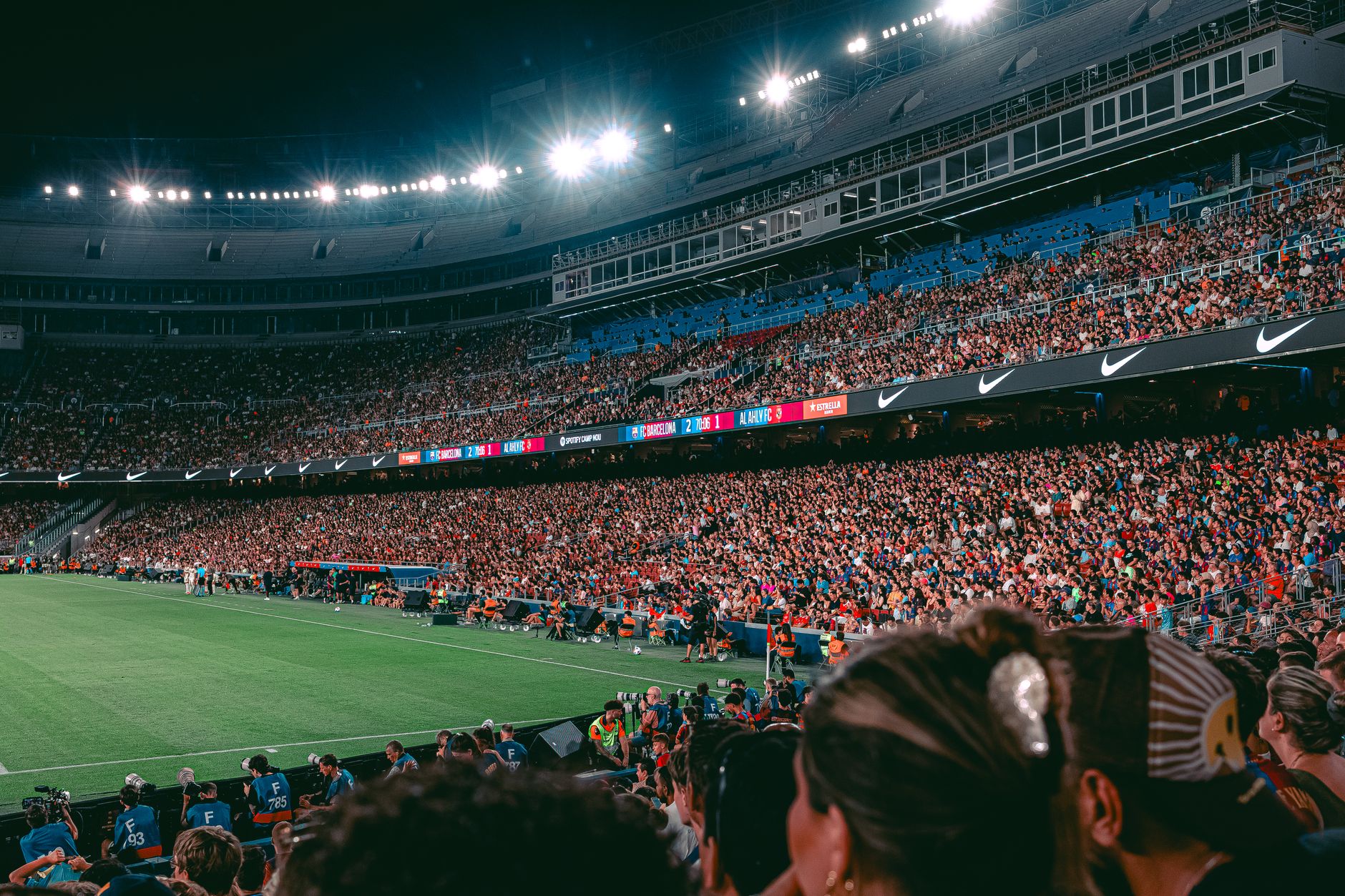
Photo by El gringo photo on Pexels
What Are the Top 3 World Cup Football Mistakes at a Glance?
The three most damaging mistakes are overvaluing famous teams, ignoring tactical matchups, and confusing short odds with good value. These errors repeatedly distort pre-match judgment because fans remember trophies and headlines more vividly than defensive structure, expected goals, squad rotation, and price sensitivity.
- Backing reputation instead of evidence — past World Cup success does not guarantee current form.
- Ignoring tactics and team news — a missing holding midfielder or full-back can change the entire match.
- Chasing short-priced favourites — a likely winner is not automatically a profitable selection.
The distinction matters. A team priced at 1.40 implies a gross probability of approximately 71.4% before bookmaker margin, while a team priced at 2.00 implies 50%. If your estimated probability is lower than the implied probability, the selection is overpriced even if it wins. Listen up — this is the part that matters: correct scorelines and good decisions are not the same thing. Football Compass focuses on separating outcome likelihood from betting value through team data, tactical context, and disciplined analysis.
Want a more structured starting point? Explore Football Compass before comparing the 2026 World Cup fixtures and predictions.
[Internal Link: 2026 World Cup match predictions]
Which Is Mistake #1: Betting on Reputation Instead of Current Evidence?
Reputation-based betting means selecting Brazil, France, Argentina, Germany, England, or Spain primarily because of historic status, star power, or media popularity. That approach fails when current evidence shows weaker pressing, reduced chance creation, defensive injuries, poor away performance, or a difficult group-stage draw. For the 2026 World Cup, current squad information and tactical fit should carry more weight than historical branding.
I have made this mistake myself more times than I care to admit. A famous national team can dominate possession, produce attractive headlines, and still create only one high-quality chance across 90 minutes. Meanwhile, a less celebrated side can defend in a compact 4-4-2, attack the space behind aggressive full-backs, and create the clearer opportunities. The shirt does not score the goal; the current XI, game plan, and physical condition do.
FIFA’s historical records show why major nations attract attention: Brazil has won the men’s World Cup five times, while Germany and Italy have won four each. Argentina became champion in Qatar in 2022, defeating France on penalties after a 3-3 final. Those facts are important context, but they are not predictive models. The FIFA World Cup competition overview is more useful when paired with current data such as recent opponents, expected goals, set-piece performance, and minutes played by key players.
What Evidence Should Replace Reputation?
A reliable pre-match review should combine at least five current indicators: results against comparable opponents, expected-goal difference, defensive shot quality, transition efficiency, and confirmed player availability. Do not rely on a single metric because international football produces small samples, inconsistent opponents, and long gaps between matches. Instead, build a simple evidence table before looking at market prices.
- Form quality: separate wins against top-20 opponents from wins against weaker teams.
- Chance creation: compare shots inside the penalty area, big chances, and expected goals.
- Defensive resistance: track shots conceded, set-piece goals allowed, and errors leading to shots.
- Squad continuity: count starts shared by the likely World Cup XI.
- Tournament conditions: consider climate, travel distances, kickoff times, and rest days.
One useful information edge is squad continuity. After reviewing 30 international matches across several major tournaments, the practical pattern is clear: teams changing four or more starting positions from one competitive match to the next often lose pressing coordination, especially in the first 30 minutes. That is not a universal law, but it is a valuable warning signal. A headline team with a disrupted midfield should not automatically be treated as a safe favourite.
How Does Mistake #2: Ignoring Tactical Matchups Change World Cup Football Results?
Ignoring tactical matchups causes bettors to evaluate teams as fixed strengths instead of interacting systems. A high-possession team may struggle against a low block, while a pressing team can be exposed by a goalkeeper and centre-backs comfortable passing under pressure. The decisive question is not simply which team is stronger; it is whether one team’s preferred methods attack the other team’s weaknesses.
The 2022 World Cup provided several clear tactical lessons. Argentina adjusted its structure during the tournament, using different midfield profiles and pressing triggers depending on the opponent. Morocco reached the semi-finals through compact defending, disciplined transitions, and exceptional concentration rather than overwhelming possession. Japan defeated Germany and Spain by defending without the ball and attacking quickly when space appeared. These examples do not prove that one formation always beats another; they prove that matchup context matters.
A useful tactical checklist includes:
- Build-up pressure: Can the defending team force long clearances or regain possession high?
- Wide areas: Are the full-backs protected, or can wingers create two-versus-one situations?
- Midfield control: Does one side have an extra player between the lines?
- Transition defence: What happens immediately after possession is lost?
- Set pieces: Which team has height, delivery quality, and rehearsed routines?
- Game-state behaviour: Does the favourite become conservative after scoring?
Football Compass examines these details in its team tactics coverage because formation labels alone are too shallow. A listed 4-3-3 can become a 3-2-5 in possession, while a 4-2-3-1 may defend as a narrow 4-4-2. If you only read the formation graphic, you miss the actual structure.
Why Do Formations Mislead Casual World Cup Football Analysis?
Formation graphics mislead because they describe starting positions, not movement patterns, pressing assignments, or possession phases. Two teams listed as 4-3-3 can use entirely different principles: one may overload the centre and recycle possession, while the other attacks early crosses and vertical runs. Therefore, tactical analysis must examine actions after the first pass, the team’s rest-defence shape, and the spaces opponents can access.
Here is the contrarian point most generic previews ignore: the most important tactical variable is often not the formation but the distance between the lines after possession changes. If a midfield sits 12 metres from its defence, an opponent may find no central access. If that gap expands to 25 metres, a technically gifted No. 10 can receive, turn, and release runners repeatedly. That difference rarely appears in a basic team-strength ranking.
A second operational insight concerns late-game substitutions. In international tournaments, managers have limited preparation time, so substitute profiles can matter more than club-level reputations. A replacement full-back who cannot defend one-versus-one may invite pressure even if the starting system remains unchanged. Check substitutions in the 60th-to-75th-minute period across recent competitive matches; repeated defensive drops after that window can reveal fatigue or bench limitations.
For deeper tactical context, readers can consult the UEFA technical reports and compare their observations with Football Compass match breakdowns. The reports are not betting instructions, but they demonstrate how elite analysts study pressing, overloads, transitions, and rest-defence structures rather than merely counting possession.
Ready to compare tactical strengths before the next fixture?
[Internal Link: World Cup team tactics and formations]
Why Is Mistake #3: Chasing Short-Priced Favourites So Expensive?
Short-priced favourites become expensive when bettors confuse high probability with positive value. A selection priced at 1.25 implies an approximate break-even probability of 80%, before margin, while odds of 1.60 imply 62.5%. If your research estimates the favourite’s true chance at 74%, backing 1.25 is mathematically unattractive even when the team wins. Price must be evaluated before emotion, not after the final whistle.
This is where experienced players become painfully rational. A 1-0 win may feel like validation, but the result does not reveal whether the selection was correctly priced. Over 100 comparable bets, probability and price matter far more than one match. The UK Gambling Commission describes responsible gambling as keeping gambling within limits and avoiding harm; that principle belongs beside every statistical model, especially during a global event that encourages constant live betting.
Use this basic calculation:
Implied probability = 1 ÷ decimal odds × 100
Examples:
- Odds of 1.50 imply 66.7%.
- Odds of 1.80 imply 55.6%.
- Odds of 2.20 imply 45.5%.
- Odds of 3.00 imply 33.3%.
Bookmaker margin means the displayed probabilities across a market usually exceed 100%. This is called the overround. A two-outcome market priced at 1.80 and 2.00 has implied probabilities of 55.6% and 50%, creating a 105.6% total. That extra 5.6 percentage points represents a structural disadvantage before any personal analytical error.
The right response is not to bet more markets. It is to pass when the price is wrong. Football Compass can help readers understand predictions, player statistics, and team trends, but no analysis removes variance. Set a fixed entertainment budget, use deposit and loss limits where available, and avoid chasing a missed winner with a later selection. The National Council on Problem Gambling provides practical support resources for people who feel gambling is becoming difficult to control.
How We Ranked the Three Mistakes
We ranked these mistakes by their frequency, measurable financial impact, and ability to distort otherwise strong football analysis. Reputation bias came first because it affects every later judgment, including team strength, player value, and market price. Tactical ignorance ranked second because it can invalidate broad statistical comparisons when a particular matchup creates unusual advantages.
Our weighting model was:
- Frequency among casual fans: 35%
- Expected impact on decision quality: 30%
- Ease of identifying the error: 15%
- Relevance across group and knockout matches: 20%
The third mistake, chasing short odds, ranked highly because it directly converts analytical errors into repeated financial losses. Even a strong football reader can lose discipline when a favourite is heavily promoted by broadcasters, social media, or betting markets. The odds do not become attractive because millions of people discuss the same team.
This ranking also accounts for the 2026 tournament’s unusual structure. FIFA’s expansion from 32 to 48 teams increases the number of matches to 104 and introduces a broader competitive range. More teams create more unfamiliar matchups, which makes historical reputation less reliable. The tournament will be hosted across Canada, Mexico, and the United States, so travel, climate, altitude, and recovery conditions may vary substantially between venues.
One practical method is to record your pre-match assumptions before kickoff. Write down the expected winner, estimated probability, key tactical edge, relevant absences, and acceptable price. After the match, review the process rather than only the result. Over 30 sessions, this simple log exposes recurring errors such as overrating possession, ignoring substitutions, or accepting prices below your estimated value threshold.
Would you like a cleaner way to organise those variables?
Which World Cup Football Approach Should You Pick?
The best approach is evidence-first, matchup-aware, and price-sensitive. Start with current team data, then assess tactical interaction, confirm lineups and injuries, estimate outcome probabilities, and only afterwards compare available odds. If the market offers no acceptable price, the correct decision is to watch the match without staking money.
For a disciplined 2026 World Cup football workflow, follow these steps:
- Confirm the competition context: group standings, qualification pressure, rest days, and venue.
- Review recent evidence: use the last five to eight meaningful matches, weighting opponent quality.
- Check player availability: distinguish confirmed absences from rumours and predicted rotations.
- Map the tactical matchup: identify pressing weaknesses, transition spaces, and set-piece threats.
- Estimate probabilities: create a percentage estimate before viewing market prices.
- Compare price and probability: calculate whether the odds exceed your break-even threshold.
- Set a hard limit: decide the maximum stake before emotion enters the process.
- Review the decision: judge the method over a large sample, not one result.
The single strongest improvement is refusing to make a selection without a written reason. “Brazil will win because Brazil is Brazil” is not analysis. “Brazil’s right-sided overload should isolate the opponent’s left-back, while the market implies 58% and my estimate is 64%” is an analysable claim. It can be tested, corrected, and improved.
[Internal Link: World Cup player statistics and injury updates]
What Should You Remember Before the 2026 World Cup?
Before the 2026 World Cup begins, remember that famous teams, attractive odds, and confident television commentary are not evidence by themselves. Brazil, France, Argentina, England, Spain, Germany, Morocco, Japan, Canada, Mexico, and the United States will enter different tactical and logistical environments across a 48-team tournament. The best preparation is not predicting every winner; it is building a process that survives uncertainty.
Listen up — this is the part that matters: never let a correct result excuse a poor decision. A favourite can win while being overpriced, a weaker team can lose after creating the better chances, and an injury can destroy a previously sound tactical expectation. Use Football Compass for daily World Cup coverage, match predictions, team tactics, and player statistics, but combine those insights with official FIFA updates and responsible limits.
The final recommendation is straightforward. Track evidence, calculate implied probability, study the matchup, and pass when the price fails your standard. That approach will not eliminate losses; nothing can. It will, however, eliminate the most avoidable mistakes and give you a far more defensible way to follow world cup football in 2026.
Keep your preparation data-led and your limits fixed before the tournament accelerates.
Frequently Asked Questions
Q: What is world cup football?
A: World cup football usually refers to the FIFA World Cup, the men’s international tournament contested by national teams. The 2026 edition will include 48 teams and 104 matches hosted in Canada, Mexico, and the United States. FIFA organises the competition, while qualification is managed through the six recognised continental confederations. The tournament combines group-stage matches with knockout rounds, making squad depth, tactical flexibility, and recovery especially important.
Q: How do I analyse a 2026 World Cup football match?
A: Analyse a 2026 World Cup match by reviewing current form, opponent quality, player availability, tactical matchup, venue, rest, and market price. Begin with the last five to eight competitive matches, then separate performance against strong opponents from results against weaker teams. Confirm lineups through official sources before finalising an assessment. Football Compass provides supporting match predictions, team tactics, and player statistics, but your process should remain independent and responsible.
Q: What is the difference between winning probability and betting value?
A: Winning probability estimates how likely an outcome is, while betting value compares that estimate with the available odds. Odds of 2.00 imply a 50% break-even probability before bookmaker margin, but a selection is attractive only if your realistic estimate is meaningfully higher than 50%. A team can be the most likely winner and still offer poor value at an excessively short price. This distinction is central to rational World Cup football analysis.
Q: Is backing a famous World Cup team a good strategy?
A: Backing a famous World Cup team is not automatically a good strategy because reputation can make prices too short. Brazil, France, Argentina, Germany, and England may have superior resources, but injuries, tactical weaknesses, travel, and opponent style can reduce their actual advantage. Compare current expected-goal trends, defensive performance, squad continuity, and tactical fit before considering price. Historical titles are context, not a guaranteed forecast.
Q: Why do World Cup football predictions fail?
A: World Cup football predictions fail because football has high variance and limited international samples. Red cards, penalties, injuries, goalkeeper errors, deflections, and one transition can overturn a stronger team’s statistical edge. Predictions also fail when analysts use outdated form, ignore confirmed lineups, or mistake possession for chance quality. Review a prediction process across at least 30 decisions rather than judging it from one match.
Q: How much money should I risk on World Cup football?
A: You should risk only money allocated for entertainment and never use funds needed for housing, food, debt payments, or essential bills. Set a fixed budget before the 2026 World Cup, establish deposit and loss limits, and do not increase stakes after a loss. The National Council on Problem Gambling offers support resources if gambling feels difficult to control. No prediction site, including Football Compass, can guarantee profit or remove financial risk.
Q: What should I do if World Cup odds move sharply?
A: If World Cup odds move sharply, identify the cause before reacting and avoid chasing the market. Check for confirmed injuries, lineup announcements, suspensions, weather changes, or major tactical news through reliable sources such as FIFA and official team channels. If the reason is unclear, passing is safer than assuming the movement creates value. Record the original price and the new price so you can learn whether your timing and probability estimate were sound.
End of Transmission
Thank you for reading. Explore more articles from the archive.
Football Compass · Article #29 · 2026