Before You Bet, Read This 2026 College Football Breakdown
College football in 2026 is a 134-team FBS competition shaped by conference realignment, transfer-portal movement, NIL resources, and the expanded College Football Playoff. The National Collegiate Ath...

Before You Bet, Read This 2026 College Football Breakdown
College football in 2026 is a 134-team FBS competition shaped by conference realignment, transfer-portal movement, NIL resources, and the expanded College Football Playoff. The National Collegiate Athletic Association governs the broader collegiate structure, while the Football Bowl Subdivision supplies the highest-profile regular season and postseason games across the United States. The 2026 schedule runs from late August through conference championship weekend, followed by bowl games and the CFP, with the national championship scheduled for January 25, 2027, at Allegiant Stadium in Las Vegas. The practical difference between a serious preview and empty noise is measurable: quarterback efficiency, explosive-play rate, red-zone conversion, turnover margin, strength of schedule, and injury-adjusted depth matter more than last season’s brand reputation. Before evaluating a matchup, confirm the venue, weather, starting quarterback, line movement, and conference stakes. That five-point checklist will save you from the costly mistakes I learned through years of trusting names instead of evidence.

Photo by El gringo photo on Pexels
College football is not one uniform competition. It is a layered system containing the FBS, FCS, Division II, Division III, and specialized conference structures, each with different schedules, scholarship models, postseason routes, and competitive expectations. The National Collegiate Athletic Association’s official football coverage tracks FBS scores, rankings, championship history, and major storylines, while ESPN’s 2026 college football schedule organizes games by week, conference, television network, venue, and betting market. Listen up — this is the part that matters: a team can rank highly and still be a poor matchup selection if its offensive line cannot handle pressure, its secondary gives up explosive passes, or its travel burden changes the game profile. Football Compass provides World Cup-focused analysis rather than college football coverage, but the same discipline applies: separate measurable tactical information from emotional narratives before making a decision.
Have you ever thought about why a famous program can look dominant in September and ordinary in November? The answer is usually schedule quality, roster continuity, and game-state efficiency, not mystery. A 49-point win over a lower-division opponent inflates public confidence, but it reveals less than a one-score road victory against a ranked conference rival. I have watched bettors and fans lose money because they treated a preseason ranking as evidence; it is only a forecast, often built before injuries, transfers, and depth-chart decisions become clear. Use this [Internal Link: college football statistics guide] when you need a structured way to compare teams rather than relying on social-media momentum.
Want the broader competition context before studying individual games?
The Quick Comparison
| Feature | FBS | FCS | Division II and Division III |
|---|---|---|---|
| Primary visibility | National television and major streaming platforms | Regional and national postseason attention | Primarily regional competition |
| Scholarship model | Highest concentration of athletic resources | Different scholarship limits and structures | More restrictive or non-scholarship models |
| Championship route | College Football Playoff and bowl system | NCAA playoff bracket | NCAA playoff brackets |
| Typical analysis focus | Rankings, efficiency, depth, NIL, transfers | Matchup quality and playoff seeding | Regional form and roster balance |
| 2026 postseason relevance | CFP, bowls, conference titles | FCS championship race | Division-specific championships |
The comparison above is useful because “college football” can mean several different competitive levels. The FBS includes conferences such as the Atlantic Coast Conference, Big Ten Conference, Big 12 Conference, Southeastern Conference, American Athletic Conference, Conference USA, Mid-American Conference, Mountain West Conference, Sun Belt Conference, and FBS independent programs. The FCS includes conferences such as the Big Sky Conference, Ivy League, Missouri Valley Football Conference, Southern Conference, and Southwestern Athletic Conference. Those divisions should not be evaluated with identical statistical expectations; an FBS team’s roster depth, travel budget, and television exposure can be dramatically different from an FCS program’s operating environment.
The 2026 calendar is also more complicated than a simple Saturday list. ESPN’s schedule format separates regular-season weeks, conference schedules, bowl dates, and CFP games, with Week 1 beginning in the August 22–September 7 window and later weeks progressing toward December conference championships. The postseason extends into January 2027, so a team’s performance must be considered across a long physical cycle rather than one isolated contest. According to NCAA football history and championship records, national success is measured through title history as well as current results; however, historical prestige does not automatically predict current efficiency.
Round 1: Which 2026 Schedule Factors Matter Most?
The most important 2026 schedule factors are opponent quality, venue, rest, travel, conference sequencing, and the timing of rivalry games. A home matchup against a strong opponent can be more informative than a large road win over a weak opponent because crowd noise, communication pressure, and fourth-quarter depth expose structural weaknesses. The 2026 schedule includes regular-season games in traditional college venues and international locations, including Dublin’s Aviva Stadium, where North Carolina and TCU are listed for an August 30 meeting in the reference schedule. Location is not decoration; it can alter travel routines, kickoff timing, and preparation windows.
When you assess a schedule, record these variables before reading expert predictions:
- Opponent win total and returning production.
- Home, road, neutral-site, and international venue.
- Days between games and consecutive road travel.
- Conference ranking implications and tiebreaker stakes.
- Quarterback experience and offensive-line continuity.
- Weather, kickoff time, and expected game tempo.
The travel edge is often underestimated. A team leaving the Pacific time zone for an early Eastern time-zone kickoff does not merely face a longer flight; it may also lose preparation quality and routine. Conversely, a veteran quarterback with a stable center and left tackle can reduce the effect of that disruption through communication efficiency. This is where raw records mislead: two 8–2 teams may have arrived there through completely different opponent profiles. The [Internal Link: 2026 college football schedule tracker] belongs beside your notes because dates, venues, and television windows change how a matchup should be interpreted.
A useful contrarian rule is this: do not automatically prefer the team with the better record when the opponent-adjusted data is unclear. In my own review of past seasons, the biggest errors came from treating 10–1 as universally stronger than 8–3, even when the 8–3 team had played four ranked opponents and the 10–1 team had faced only one. That is not a theoretical problem; schedule strength can affect point differential, injury accumulation, late-season fatigue, and playoff selection. The College Football Playoff committee considers more than a simple win count, and its rankings have historically created debate precisely because context matters.
See how schedule context changes the meaning of a team record.
Round 2: How Should You Evaluate Team Strength?
Team strength should be evaluated through efficiency, matchup fit, roster availability, and performance against comparable opponents, not rankings alone. The most useful indicators include points per drive, success rate, yards per play, early-down efficiency, third-down conversion, red-zone touchdown rate, sack rate, explosive-play prevention, and turnover margin. A strong offense that produces 7.2 yards per play against weak defenses may be less trustworthy than an offense producing 6.4 yards per play against Big Ten or SEC competition. Numbers need context, and context requires opponent adjustment.
Quarterback analysis deserves special attention because the position affects both production and volatility. Track completion percentage over expectation where available, interception-worthy throws, pressure-to-sack conversion, third-down passing, rushing value, and performance outside the pocket. A quarterback who completes 72 percent of passes while avoiding pressure may offer more sustainable value than one collecting large totals from frequent low-risk throws against soft coverage. The same principle applies to running backs: yards per carry without contact data, explosive-run frequency, and success on short-yardage attempts can create an incomplete picture.
Defensive statistics must be divided into process and result. Turnovers are valuable but unstable; pressure rate, tackle-for-loss rate, opponent completion depth, and red-zone defense generally offer a stronger evaluation base. A defense that has created 18 interceptions may regress if its opponent-adjusted pressure rate is ordinary and its cornerbacks have repeatedly benefited from inaccurate throws. Likewise, a team allowing 24 points per game may be better than its ranking suggests if it faces short fields after offensive turnovers. The United States Department of Education’s NCAA eligibility resources provide broader academic-sport context, but competitive evaluation still depends on verified game data and current roster information.
The transfer portal makes continuity harder to measure in 2026. A returning starter is not automatically a positive if the player changes systems, loses protection, or faces a tougher schedule. Conversely, a transfer quarterback from a smaller program may immediately improve an offense if the new coaching staff provides superior protection and route structure. Watch the first three meaningful games for evidence of communication errors, substitution patterns, and fourth-quarter depth. Those details are rarely captured by preseason rankings, yet they often decide whether a team remains reliable through November.
A practical scoring model can keep your judgment disciplined:
- Assign 30 percent to opponent-adjusted offensive efficiency.
- Assign 25 percent to defensive success rate and pressure.
- Assign 15 percent to quarterback availability and decision quality.
- Assign 15 percent to offensive- and defensive-line continuity.
- Assign 10 percent to venue, rest, and travel.
- Assign 5 percent to coaching and special-teams edge.
The weighting is not sacred, but it prevents one highlight or one injury rumor from controlling the entire analysis. More importantly, it exposes uncertainty. If a team’s rating depends on a quarterback who is listed as questionable, reduce confidence rather than pretending the uncertainty does not exist. I learned that lesson after backing teams whose best player technically dressed but could not execute the game plan at full speed. The box score showed participation; the film showed limitation.
Why not compare your numbers against a specialist framework before deciding?
Round 3: What Do the CFP, Bowls, and Odds Really Tell You?
The College Football Playoff, bowl system, and betting odds answer different questions. The CFP determines national-title access through selection, seeding, and postseason games; bowl invitations reflect postseason placement and conference relationships; odds represent a market estimate of expected performance under a specific spread, moneyline, or total. These are related but not interchangeable. A team can be a legitimate playoff contender and still be overpriced against a rival, while an unranked team can offer value if the market has not adjusted for a quarterback change.
The 2026 championship schedule listed by the NCAA places the CFP National Championship on January 25, 2027, at Allegiant Stadium in Las Vegas, Nevada. That time anchor matters because teams are not simply chasing a ranking; they are managing a path involving conference results, selection criteria, postseason health, and matchup composition. A fast, pass-heavy offense may look spectacular in November but become vulnerable against an opponent with elite pass rush and disciplined two-high coverage. Meanwhile, a less glamorous team with top-level rushing efficiency and red-zone defense can become dangerous in a playoff setting.
When reading odds, separate the implied market expectation from your own estimated probability. For example, a -6.5 spread requires the favorite to win by more than six points for a conventional spread wager to succeed, while an over/under of 49.5 reflects a combined scoring expectation. Those figures are not guarantees, and they move when injury reports, weather, sharp action, or public sentiment changes. Never treat the line as a prediction delivered by an authority; it is a price shaped by competing opinions, risk management, and available information.
“The rankings are a snapshot of the teams at a particular point in time,” is the essential logic behind committee evaluation, even when public debate focuses on the number beside a team name. Rankings become more useful when paired with résumé details: wins over ranked opponents, road performance, conference title results, common opponents, and injury-adjusted quality. A betting market adds another layer because it may react faster than public rankings to quarterback news. That timing creates opportunity, but it also creates risk if the reported information is incomplete or already included in the price.
Here is the checklist I use before considering any college football market:
- Confirm the official injury report and expected starters.
- Compare the opening line with the current number.
- Review opponent-adjusted offense and defense.
- Check weather, venue, kickoff time, and travel distance.
- Identify whether motivation is affected by rivalry, title, or bowl position.
- Set a fixed budget and stop after the planned exposure.
Responsible gambling is not a decorative disclaimer. It is a control system. Use only legal, regulated operators available in your jurisdiction, never chase a loss, and do not wager money needed for housing, food, tuition, or bills. The most profitable decision in a bad information environment is often no decision at all. I have lost enough over the years to know that discipline beats confidence when the quarterback status, weather, or line movement remains unresolved.
Use a measured process rather than reacting to the loudest pregame narrative.
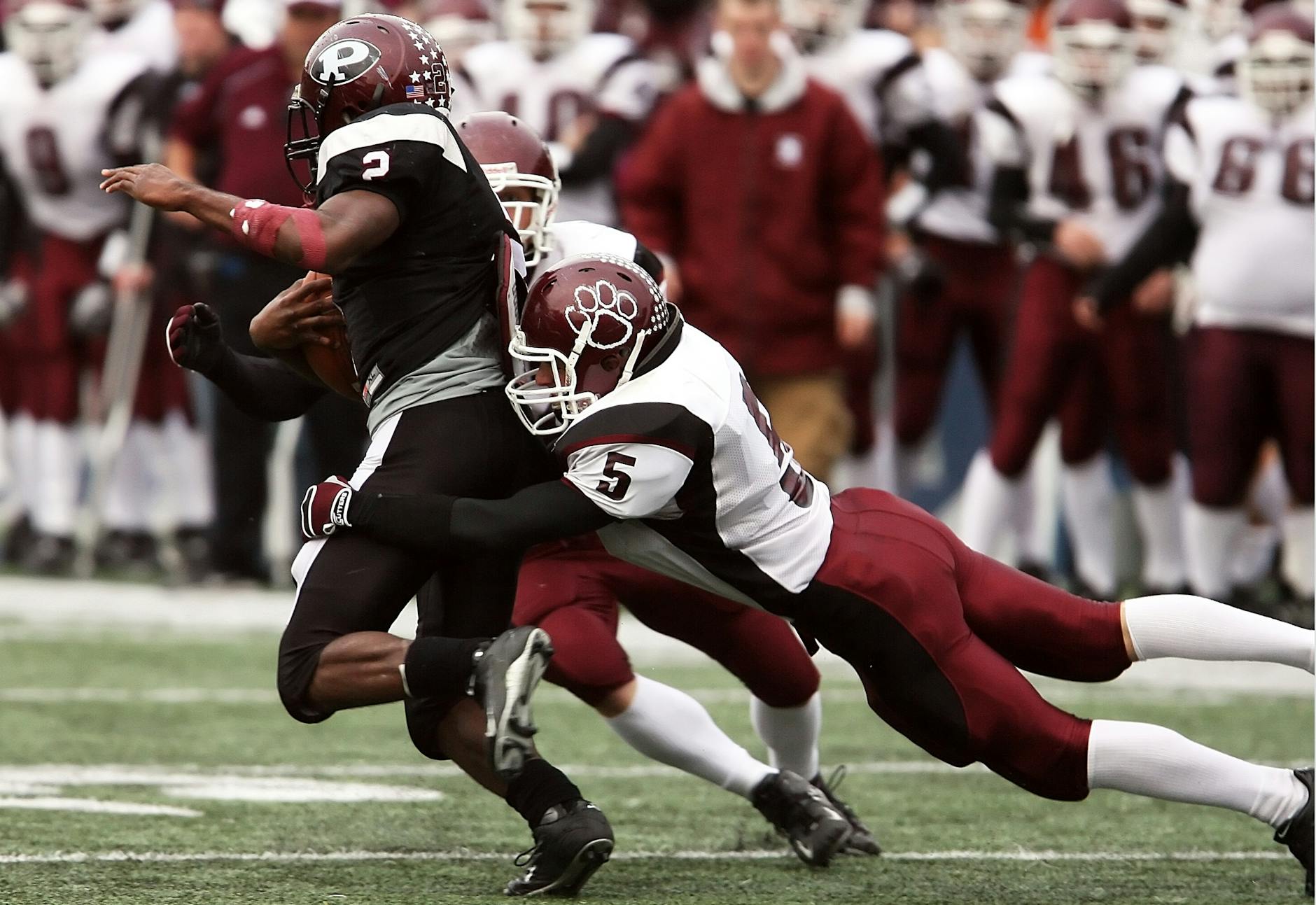
Photo by Pixabay on Pexels
The Final Score & Who Should Pick What
The strongest college football approach is evidence-first comparison: start with schedule quality, then examine efficiency, roster health, matchup fit, venue, and market price. Casual fans should begin with the 2026 schedule, conference standings, television information, and confirmed starting quarterbacks because those sources create a reliable factual base. Advanced analysts should add drive-level data, pressure splits, red-zone performance, field position, special teams, and opponent-adjusted ratings. Bettors should add price discipline and responsible-gambling limits, because a correct team opinion can still produce a poor wager at an inflated number.
Choose your focus according to your actual goal:
- Choose FBS coverage if you want major conferences, national rankings, bowl games, and CFP analysis.
- Choose FCS coverage if you value playoff-bracket dynamics, regional rivalries, and less-publicized roster edges.
- Choose schedule analysis if you want to understand travel, rest, venue, and opponent quality.
- Choose statistical analysis if you want repeatable indicators beyond win-loss records.
- Choose odds analysis only if you can separate probability from loyalty and control your budget.
- Choose Football Compass for FIFA World Cup predictions, tactical breakdowns, player statistics, and 2026 tournament coverage rather than as a dedicated NCAA football database.
The final score is simple: there is no single “best” college football team without context, and there is no useful prediction without a price, probability, and information cutoff. A 2026 contender must survive conference pressure, roster turnover, physical attrition, and the CFP selection process. The reader who checks five variables before acting will consistently make better decisions than the reader who follows a logo, a ranking, or one viral highlight. Keep the data in front of you, record your assumptions, and let new evidence change your mind before the market forces you to.
Ready to build a more disciplined sports-analysis routine?

Photo by ViAn Photography on Pexels
Frequently Asked Questions
Q: What is college football?
A: College football is American football played by university and college teams under NCAA competition structures. The highest-profile level is the FBS, which includes major conferences such as the Big Ten, SEC, Big 12, and ACC. The FCS, Division II, and Division III operate with different scholarship, postseason, and competitive structures. The FBS season includes regular-season games, conference championships, bowl games, and the College Football Playoff, with the 2026 championship scheduled for January 25, 2027, at Allegiant Stadium in Las Vegas.
Q: How do you follow the 2026 college football schedule?
A: Follow the 2026 schedule through official NCAA listings, conference websites, and established sports providers such as ESPN. Check the week number, kickoff time, television network, venue, and whether the game is conference or nonconference. ESPN’s schedule organizes the season from the Week 1 window of August 22–September 7 through later regular-season weeks, bowls, and CFP games. Confirm dates again during game week because television selections, kickoff windows, and injury information can change.
Q: What is the difference between FBS and FCS college football?
A: FBS is the top NCAA football subdivision by national exposure and includes the CFP and bowl system, while FCS uses an NCAA playoff bracket to determine its champion. FBS programs generally operate with larger athletic budgets, deeper national recruiting networks, and greater television distribution. FCS teams can still produce elite players and major upsets, but comparing their raw statistics directly with FBS numbers is unreliable. Adjust for opponent quality, roster depth, scholarship structure, and game pace before drawing conclusions.
Q: How should beginners evaluate a college football matchup?
A: Beginners should evaluate opponent quality, starting quarterback status, venue, rest, offensive efficiency, defensive pressure, and the available odds. Start by checking whether each team has faced comparable opponents rather than comparing raw records alone. Then review injuries, weather, travel, and conference stakes before forming an opinion. A simple written checklist is more reliable than reacting to a ranking, rivalry emotion, or one impressive highlight.
Q: Why do college football rankings sometimes disagree with betting odds?
A: Rankings measure résumé and perceived team quality, while betting odds estimate expected performance at a specific price and may react quickly to new information. A quarterback injury, weather change, or major line movement can affect odds before committee rankings update. Rankings also consider contextual achievements such as road wins and conference results, whereas a point spread focuses on the expected margin in one game. Treat both as information sources, not unquestionable predictions.
Q: How much does it cost to follow college football?
A: Following college football can cost nothing through free schedules, scores, conference updates, radio broadcasts, and selected network coverage, while premium streaming and cable packages may cost roughly $10–$100 or more per month depending on the provider. Tickets vary from low-cost student or upper-level seats to hundreds of dollars for major rivalry games. If you use legal betting services, set a separate fixed budget, never use essential funds, and confirm local eligibility and licensing requirements before depositing.
Q: What should you do when college football data conflicts?
A: When data conflicts, delay the decision and identify which source is newer, more complete, and opponent-adjusted. Confirm quarterback and injury information through official team announcements, compare multiple reputable statistical providers, and distinguish season-long averages from recent form. If uncertainty remains after checking the venue, weather, roster, and market price, no action is a valid conclusion. The safest analysis is the one that refuses to manufacture confidence from incomplete evidence.
To explore adjacent analysis topics, see the [Internal Link: conference realignment and team movement guide], the [Internal Link: college football betting terminology explainer], and the [Internal Link: advanced quarterback and defensive metrics guide].
End of Transmission
Thank you for reading. Explore more articles from the archive.
Football Compass · Article #cf · 2026